Why do David Agus and Jason Arday annoy us so much?
We give them status, and we give their employees the power to give them status, and in return they lie to us, they reward liars, and they're too lazy to do their damn jobs.

I’m gonna talk today about two notorious cases of academic misconduct where the university ignored or covered up the offense. In each case, three questions arise:
What did the perpetrator actually do?
Why did their employer back them in their lies?
Why do these cases make us so mad?
The new contribution of this post is my answer to #3, but to get there I’ll have to go through #1 and #2 as well.
This came to mind today because a journalist called me on the phone to ask about David Agus, the celebrity doctor and USC professor who put his name on a book which had, according to reporting from the Los Angeles Times, “at least 95 separate passages in the book that resemble — sometimes word for word — text that originally appeared in other published sources available on the internet. The passages are not credited or acknowledged in the book or its endnotes. . . . Long sections of a chapter on the cardiac health of giraffes appear to have been lifted from a 2016 blog post on the website of a South African safari company titled, “The Ten Craziest Facts You Should Know About A Giraffe.”
Agus is an oncologist with no expertise on giraffes, but that didn’t stop him from plagiarizing a book chapter on the topic.
He’s a man who claims to be “always uncomfortable being the focus of any media,” yet he has a page full of clips of TV and promotional appearances:

Also he wrote, “I’m not pitching a tent to watch chimpanzees in Tanzania or digging through ant colonies to find the long-lived queen, for example . . . I went out and spoke to the amazing scientists around the world who do these kinds of experiments, and what I uncovered was astonishing.” Ummm, maybe this is the case with the ant colonies, but it obviously isn’t the case with the giraffes–I’m still stunned that he did an entire chapter on them! He didn’t speak with any scientists, “amazing” or otherwise. He just ripped off the website of a safari company.
I’d say, “What a loser,” but in the usual scheme of things this guy’s a winner. He still appears to be employed by USC—he’s the “founding director and CEO of the Lawrence J. Ellison Institute for Transformative Medicine”—despite clearly violating their ethics code:

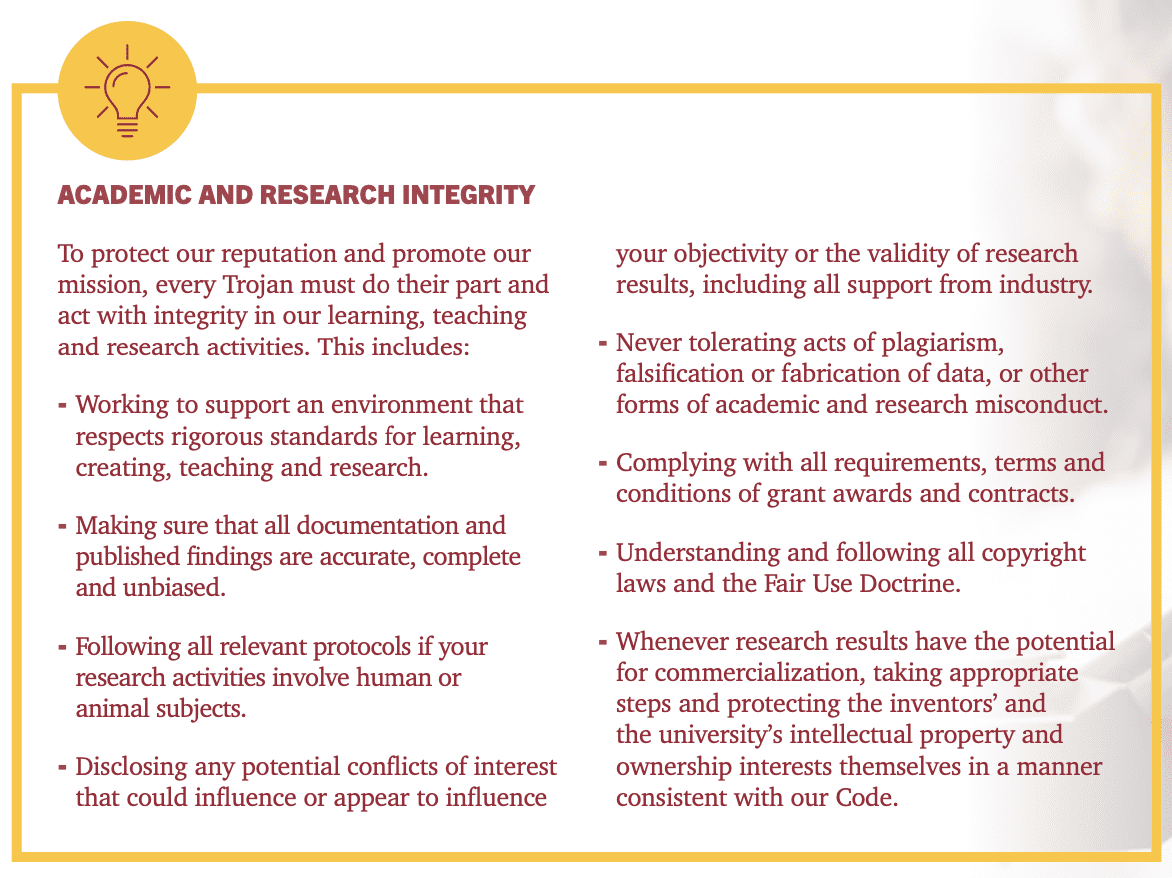
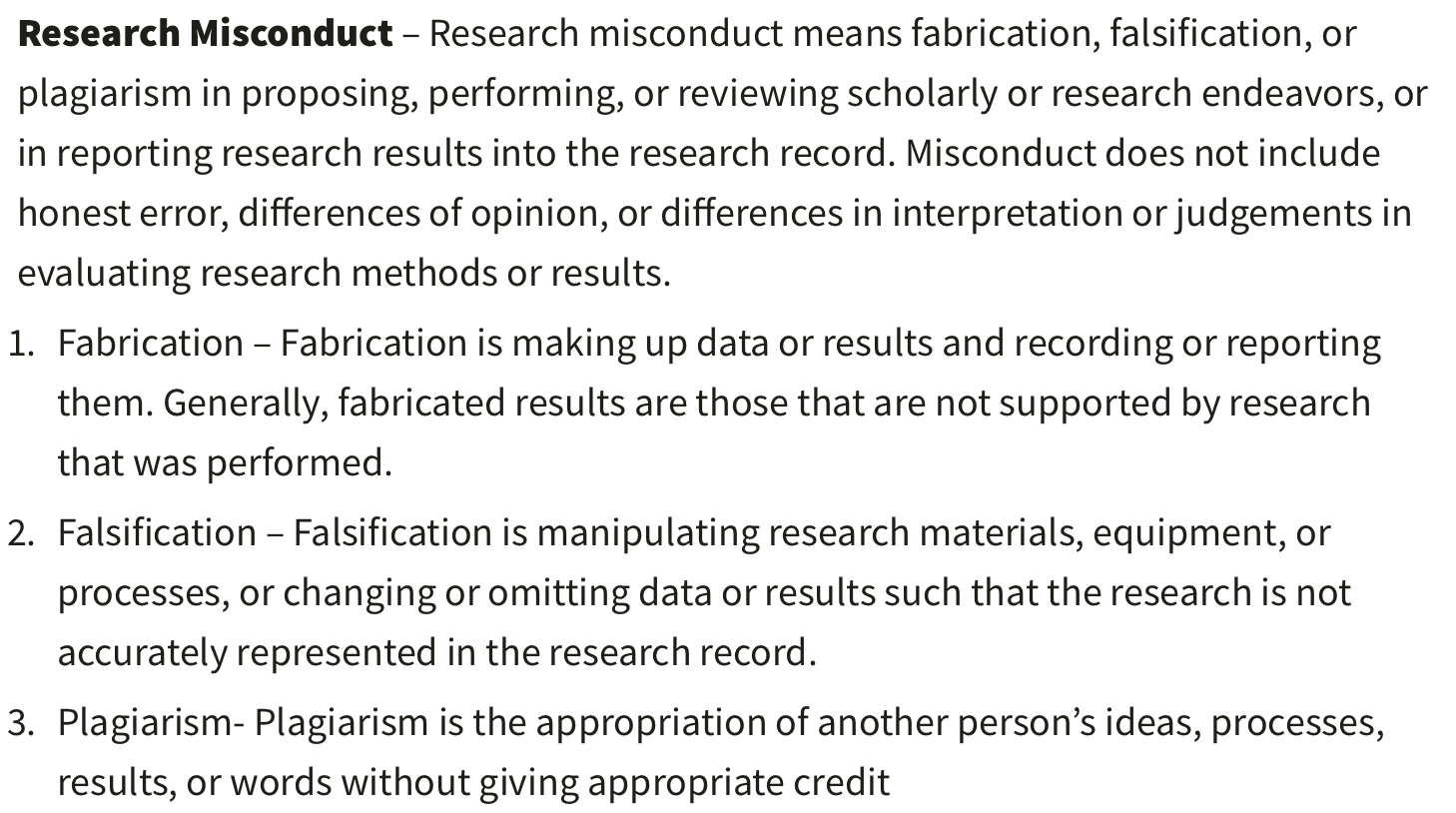
Anyway, my conversation with the reporter was pretty short. As I told him, everything I know about Agus I got from public sources, and I put it all in my blog posts—I left it all on the field, as it were.
Indeed, you could accurately say that I don’t know much more about David Agus than David Agus knows about giraffes.
At the end of the conversation, the reporter asked me why I wrote about Agus in the first place. I told him that people just send me things, and this giraffe plagiarism story pushed a lot of my buttons: as a statistician, I get mad when people lie, and I’m interested in the various ways that people react to being caught out in a lie.
But then I got to thinking, that this isn’t the only thing that annoyed me. David Agus is not just a well-paid doctor with a taste for TV appearances and celebrity contacts. He also has high status by virtue of being a medical researcher at a respected university: he’s not just a rich guy who burned hundreds of millions of dollars on a failed business venture (I guess that copy-and-pasting material from a website on giraffes does not qualify you to run an agriculture company), he’s also a virtuecrat. Not just a professor (although, hey, that’s pretty good already, I’ll have to admit) but a medical researcher at the third-most-renowned university in the second-largest city of the richest and most powerful country the world has ever known.
And that, I realized, is what really makes me mad. I guess that here I’m speaking as a political scientist more than as a statistician. We as a society make bargains with certain groups. Cops are allowed to harm or kill people at their discretion and are mostly exempt from the law; in return they are expected to enforce the law and lay their lives on the line when necessary. Politicians have all sorts of power; in return they are subject to scrutiny beyond what is given to private citizens. Churches don’t pay taxes and they are supposed to serve their parishioners and maintain the social order. And faculty at prestigious universities are given high pay, low workloads, and societal respect; in return they’re supposed to be honest and not act like greedy little pigs.
David Agus has not lived up to his part of this bargain.
But it’s not just that. There’s also the role of his employer, the University of Southern California. They get something from society too, and not just that same property tax exemption given to churches. USC—ultimately, its board of trustees—is given the power to grant the status of professor. And also the power to take it away. In the case of Agus, they have not used this power, just as the University of California did not use its power to take away the status of its data-misrepresenting professor of sleep science, just as . . . well, there are lots of examples.
The University of Southern California did not live up to its part of the bargain. Society has granted this institution the power to give special status; in return they are supposed to guard this power jealously. But they did not. Like Agus himself, they’re lazy. It’s less effort to say how wonderful your faculty are than to face the facts.
And then I suddenly thought of Jason Arday, the Cambridge University professor of education who was recently revealed to have faked his research.
Actually, it’s worse than that. Cambridge was informed about Arday’s research fraud three years ago, but the university first refused to investigate the problem, then last year when a news story was about to come out on it, they sicced lawyers on the newspaper to suppress it.
So, here we go again. Jason Arday, like David Agus, did not live up to his part of the bargain. Society gave him status and he returned the favor by lying all over the place.
I’m inclined to give Arday more of a break than Agus, because Arday was given that Cambridge professorship under false pretenses. He was always living on borrowed time, and it’s not clear how he could ever have climbed down from his fabrications without blowing up his life and career. Also he appears to have been a pathological liar, in the sense of lying about all sorts of things, not in any strategic way, and you gotta feel bad for someone who has this sort of condition. In contrast, Agus when “wrote” his fake book, he was already a successful celebrity doctor and professor, so, first, he didn’t need to do it in any sense, and, second, he could’ve been honest about it and done restitution while still keeping his status. Even now it’s probably not too late for him.
But the two universities—USC and Cambridge—they both are behaving comparably. Actually, Cambridge has behaved worse. USC just brushed their scandal under the rug and acted like it had never happened. Cambridge is the org that hired the evil law firm and sent out their pitiful, sorry-ass press agent to falsely say that Arday was a “victim of a vile campaign to undermine his credibility” and that he had been cleared of “allegations of plagiarism regarding his thesis and journal publications.”
Arday’s done some bad things, but it’s not his fault that his employer is doing bad things on his behalf.
So that’s the story.
With both Agus and Arday, the immediate question was: (1) what did the perpetrator actually do. And this occupied a lot of the attention: where was the research misconduct, when did it happen, how often did it occur, what other shady things was the person engaged in, etc.
The next set of questions came to their universities: (2) why did they look away from the fraud and why, in the case of Arday, did they actively attempt to intimidate reporting on it.
Now we’re at the stage of reflecting on our own reactions to the story: (3) why are we so annoyed, both at the perpetrators and at their promoters, enablers, and protectors in the university, in the news media, and elsewhere (in Agus’s case, this notoriously includes the politically-connected billionaire Larry Ellison). And I think the answer is that they betrayed the public trust.
They broke the social contract. We’re mad at these lying professors and their employers, for the same reason (although with a lesser intensity) that we’re mad at crooked cops and the not-necessarily-crooked politicians who nonetheless cover for them, and for the same reason (although, again, with a lesser intensity) that we’re mad at pedophile clergy and the not-necessarily-crooked communities that cover for them.
This doesn’t always come up in discussions of academic fraud because it’s natural to focus on the details, but I think that’s the underlying motivation for our anger.